

Buddy Valastro Shares His Story and Cake-Saving Pro Tip
"And if all else fails, there’s always sprinkles. Sprinkles are God’s cover-up."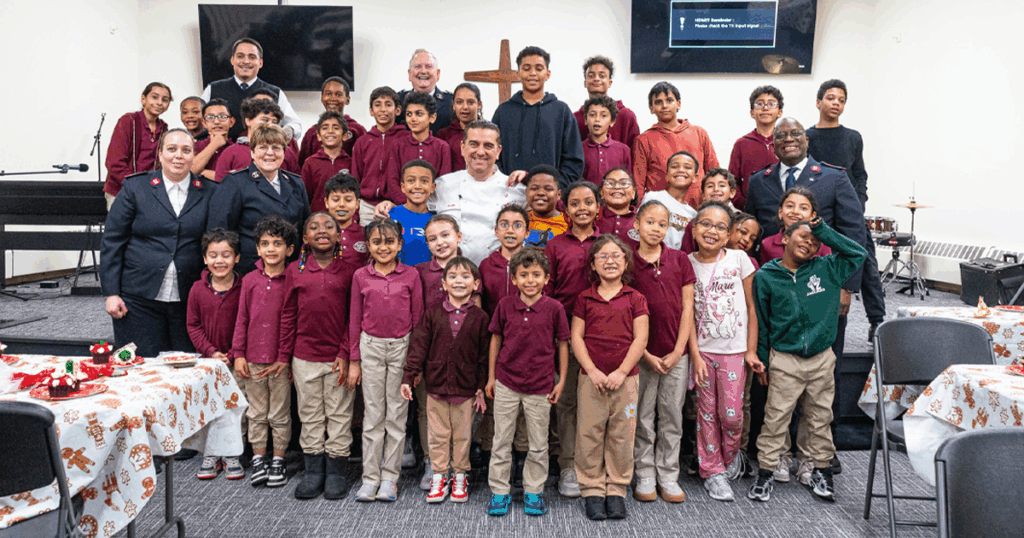
For more than a decade, Buddy Valastro has been one of America’s most recognizable bakers — a flour-dusted force of nature whose larger‑than‑life creations on Cake Boss helped turn a Hoboken family bakery into a global brand. But behind the TV fame, bestselling books, and now a sweeping national partnership with Walmart and Sam’s Club, Valastro remains, at his core, the same fourth-generation baker who took over his family’s shop at 17 and didn’t let it fail.
In this candid conversation with The War Cry, Valastro reflects on the values that shaped him, the unexpected path from neighborhood bakery to national shelves, the role of faith and family in his life, and why sprinkles remain the ultimate cake‑decorating safety net. He also recalls the impact of his time visiting The Salvation Army Jersey City corps.
The War Cry (TWC): You’ve had remarkable success — TV stardom, New York Times bestselling books, and now a major partnership with Walmart and Sam’s Club selling your cakes in thousands of stores. You’ve been involved in so many ventures. What do you think is the thread that connects it all? How does someone go from being a fourth‑generation baker inheriting a struggling New Jersey institution to building a global phenomenon?
Buddy Valastro: First, thank you for that introduction. When I hear it all together, I get chills. I feel blessed to have done and seen so much. But I never set out with a master plan. It goes back to my beginnings—my parents, the values they taught me about hard work, family, and giving back. That foundation made me who I am.
I’m definitely wired a certain way — for better or worse. I’m harder on myself than anyone else could be. When I set my mind to something, I have to finish it. That’s how it was when I took over the bakery at 17. That’s how it was when I first got on TV. I always wanted to do more.
My favorite part of TV was that just by being myself, I inspired people. I didn’t realize that at first. But a couple of years into the show, I met a little girl in Brazil through Make-A-Wish. She told me, “You make me think I can do anything.” That hit me hard. It made me understand the impact of what I was doing.
TWC: You’ve always had that “why not?” attitude — like making a cake that flushes like a toilet.
Valastro: Exactly. They’d pitch something wild, and I’d think, “How am I going to do that?” But then the gears start turning. I look around the shop thinking, “What can I cut up or repurpose to make this work?” That’s the MacGyver part of me.
TWC: That creativity shows up in your business ventures too. Tell me about the vending machine idea that led to your Walmart partnership.
Valastro: A guy from Canada showed up at my factory one day with this idea for a cannoli vending machine. I told him cannolis wouldn’t work—they’d get soggy—but cake slices might. We tried a few machines in Canada, and they sold two tractor‑trailers’ worth of cake in a month. I thought, “Maybe this is a business.”
We were about to expand to Las Vegas when COVID hit. But by then I’d figured out how to mass‑produce slices using modified‑atmosphere packaging—no preservatives, 25-day shelf life.
Walmart saw the vending machines and reached out. I was skeptical at first—you hear things about big corporations — but they told me they wanted the exact same cake we sell in Hoboken. No compromising on ingredients. They even have stricter standards than many supermarkets I’ve worked with. It was refreshing.
Now we produce both our brand and private‑label cakes for them. Depending on the day, we can make 20,000 to 50,000 cakes.
TWC: And the quality is the same as what you’d make in your bakery?
Valastro: Exactly the same. Our red velvet cake is 50 percent cream cheese in the frosting. Everything is scratch — no bag mixes. It’s just scaled up.
TWC: You’ve talked a lot about your parents and how they shaped you. What was it like taking over the family business at 17?
Valastro: My dad was my best friend. Losing him in 1994 was devastating. After he died, I told myself I wouldn’t let the bakery fail. I worked 18-hour days, seven days a week. I humbled myself to the older bakers so they’d teach me. I earned their respect through work, not because of my last name.
Now, at 47, I’m back in that same mode building my factory — seven days a week, long hours, sleeping in my office. There’s a switch that flips: I have to win. I have to finish.
TWC: You’ve mentioned your OCD as both a challenge and a strength.
Valastro: Yeah. When I’m in that mode, my brain is processing a million things at once. I notice everything. I can’t fully turn it off. My wife understands my cycles —she’s my rock — but even at home I’ll walk in and immediately spot a crooked rug or a burnt‑out bulb. It’s like AI scanning a room.
TWC: Family and community seem central to your story. You’ve granted hundreds of wishes for kids around the world. How does that affect you?
Valastro: Those visits change your whole perspective. You walk in stressed about work, and then you meet a child who’s been through hell. You hug your kids tighter afterward. It reminds you what matters.
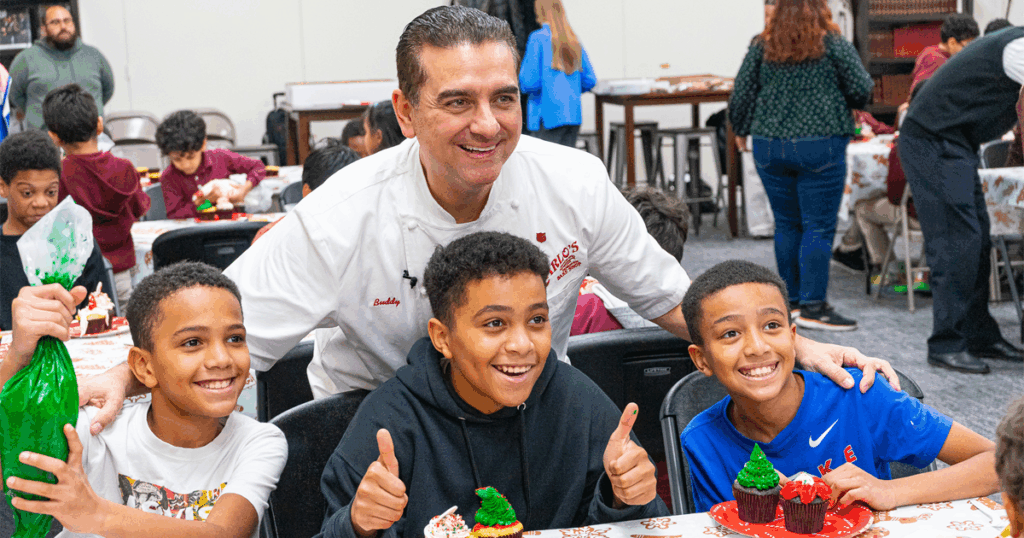
TWC: You recently visited the Salvation Army Corps in Jersey City. What was that experience like?
Valastro: Honestly, I didn’t know the full scope of what they do. I’d seen the red kettles, heard the bells, but I didn’t know they help more than 28 million people a year. When I visited the Corps, I saw infants, toddlers, teens — whole after‑school programs, food programs, support for families who can’t afford childcare. It opened my eyes.
It reminded me of my parents. Every holiday, my dad and I would bring leftover pies to the homeless shelter. He grew up in Sicily during World War II. He knew what it was like to be hungry. That shaped him, and it shaped me.
TWC: Now your own kids are entering the family business. How do you think about passing on that legacy?
Valastro: My parents told me, “You like nice things? You have to work.” I tell my kids the same. They don’t have to be bakers, but they have to learn work ethic. Right now, they say they want to join the business, and they seem passionate about it. But I’d never force it. You have to love what you do.
People think TV is easier than bakery work — and it is. Standing on your feet all day piping cakes is harder than filming. But baking is what makes me happy.
TWC: Faith is also a big part of your life. You wear your father’s St. Anthony medallion every day.
Valastro: I do. My mom was very religious. We went to church every Sunday. I was an altar boy. Faith keeps me grounded. And I try to lead by example — whether it’s compassion, charity, or scrubbing the bakery floor. I won’t ask anyone to do something I wouldn’t do myself.
TWC: Last question: Any advice for home bakers who feel they don’t have the right equipment?
Valastro: You don’t need fancy tools. Baking is a science — measure precisely and learn your oven. If your cakes dome in the middle, lower the temperature and bake longer.
Decorating is muscle memory. Practice. You can improvise tools — a knife spreads icing just fine. I’ve cut a paper plate into a cake scraper. Be crafty.
And if all else fails, there’s always sprinkles. Sprinkles are God’s cover-up.
TWC: That’s great advice. Thank you, Buddy.
Valastro: You got it.
Photos by Drew Collins and Leslie Class