Anchored or Adrift: Staying True to Transformational Mission
“And whatever you do or say, do it as a representative of the Lord Jesus, giving thanks through him to God the Father” (Colossians 3:17).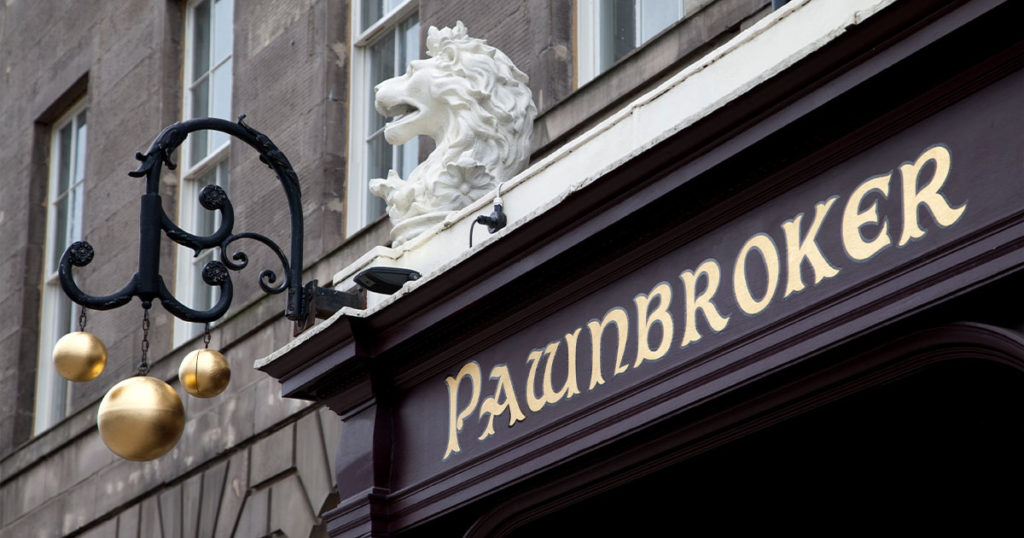
The true story of Santa Claus begins with Nicholas, born in the third century to wealthy and devoted Christian parents. When an epidemic took their lives, he was left an orphan, inheriting great wealth. Yet he chose a life of consecration, following Christ’s call to give to the poor. While still young, he became Bishop of Myra in present-day Turkey, known for generosity that flowed from a deep love for God.
One day, Nicholas heard of a desperate father unable to provide dowries for his three daughters — leaving them at risk of being sold into slavery. Moved with compassion, Nicholas acted in secret, dropping three bags of gold through their window under cover of night, forever changing that family’s future. This was more than charity; it was mercy flowing from a transformed heart.
His example inspired early church efforts to offer dignified relief to struggling families. Yet over time, these ministries drifted from their original purpose and evolved into what we now know as pawn shops. The three bags of gold that once symbolized sacrificial Christian mercy became three gold spheres above the shop door. The symbol remained, but the mission changed. What began as an act of grace rooted in love for God and neighbor gradually became a transaction, often marked by self-interest.
It was into this world that a young William Booth was apprenticed.
At 13, Booth entered the pawnbroking trade. Day after day, he watched the poor pass through the door — a mother pawning necessities to survive, a laborer surrendering his tools for a meal. Above him hung the symbol of mercy, yet inside he noticed a troubling disconnect. Booth saw that a work born from Christian compassion could retain its structure and symbols long after it had lost its soul.
When Booth encountered the gospel through Wesleyan Methodism, he came to see, as John Wesley taught, that there is no holiness without works of mercy and no true mercy without salvation. For mercy to be effective, it must flow from a transformed heart and seek the restoration of the whole person — meeting both temporal and eternal needs. To give a hungry person bread while withholding the Bread of Life ultimately falls short of true compassion. Wesley further warned that such mercy cannot be accomplished “by proxy” — it has the greatest effect through close proximity. As a means of grace, godly mercy shapes the soul of both the giver and the receiver, as believers, rooted in the Source of hope, love and life, serve selflessly and share Christ shamelessly.
Booth came to see that the deepest problem is not merely broken systems or even physical suffering, but the human heart in need of a Savior. He recognized that the greatest danger is not doing nothing, but doing something disconnected from the Source. When the mission shifts from eternal life to entertainment, from transformation to transaction, from selfless love to self-directed justice, or from compassion to a mere crutch, the outward form may remain while the inward power fades. We can continue “doing good” long after forgetting why we do it.
As Booth’s convictions deepened, he began to put them into practice, pursuing a kind of mercy that remained rooted in Christ and animated by His transforming power. Not long after his conversion, he and Will Sansom were moved by the plight of an elderly beggar woman — ragged, ridiculed and utterly alone. Booth had passed her countless times before, but now, with a heart changed by grace, he saw her differently. Determined to help, he and Sansom raised money, secured and furnished a small dwelling, and provided for her ongoing care, often praying with her and sharing the gospel. This first venture in compassionate ministry was more than an act of charity; it was mercy flowing from a heart transformed by God, seeking both the relief of suffering and the restoration of a soul.
After Sansom’s early death, Booth left the security of the pawn trade to pursue his calling. When offered higher wages to stay, he declined, later stating, “Money had nothing to do with the question … all I wanted was the opportunity to spend my life publishing the Savior to a lost world.” He refused to drift from his mission.
In Salvation for Both Worlds (1889), William Booth articulated a distinctly Wesleyan vision of mission in which evangelism and works of mercy are inseparable. Salvation must address both present suffering and eternal destiny. As he would later say, “You cannot warm the hearts of people with God’s love if they have an empty stomach and cold feet.” Yet meeting temporal needs was never the end — it was always ordered toward salvation. To separate the two was, for Booth, a dangerous drift — one that would ultimately lead to the loss of both the mission’s power and its purpose.
In 1904, Booth was invited to Buckingham Palace to meet King Edward VII and receive recognition for The Salvation Army’s work among the poor. Before leaving, the king asked for his autograph. Despite failing eyesight, Booth wrote with clarity:
Some men’s ambition is art.
Some men’s ambition is fame.
Some men’s ambition is gold.
My ambition is the souls of men.
Although honored for humanitarian work, Booth never confused good works with godly mercy. Humanitarianism improves conditions; godly mercy transforms lives. One can exist without Christ; the other depends entirely on Him. Rooted in Christ, true mercy resists drift and retains its power.
William Booth understood that the danger was not inactivity, but activity without the spiritual anchor. W. T. Stead observed that the Founder once said: “I do not want another ecclesiastical corpse cumbering the earth … When The Salvation Army ceases to be a militant body of red-hot men and women whose supreme business is the saving of souls, I hope it will vanish utterly.” Yet Stead went on to warn that the structures and systems of The Salvation Army may endure long after its soul has died — form can remain when the fire is gone.
What does our service look like today? Have we delegated mercy to those disconnected from its Source? Are we doing good, yet without the power to have Kingdom impact? Have we drifted from making “souls” our first concern?
The danger is not that we stop doing good, but that we continue doing it without God. When mercy drifts from this anchor, it can no longer transform; it has lost its soul. But when it remains rooted in the gospel of Jesus Christ, it becomes what it was always meant to be: a means through which God can transform lives — beginning with our own.
“The Salvation Army has been constructed from the first on the principle that when the soul goes out the thing must die … Since that time, however, The Salvation Army has grown so rapidly and has evolved so many agencies, built so many edifices, and created, in short, so substantial a temporal skeleton and material tabernacle that, even if it lost its soul, its corpse would be a terribly long time in decomposing.”
W. T. Stead, The Review of Reviews (1891)
Photo: Gannet77/Getty Images