





Easter Is No Coincidence
“If we hold that the Lord guides all our lives, things do not happen by accident.”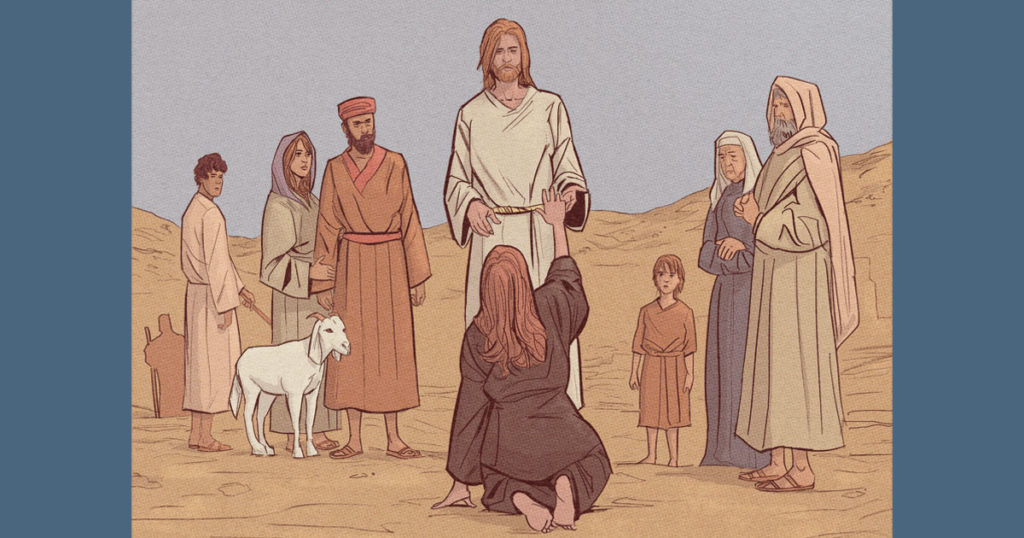
The more you study the Bible, the less you believe in coincidence, for if we hold that the Lord guides all our lives, things do not happen by accident.
People then and now connect with Jesus in the everyday flow of life, without ever indicating pre-planning. There are times when, if we cannot find definitive proof that circumstances and people are connected, we can explore what might be possible if not confirmable.
For example, Matthew, Mark and Luke tell the story of “A Dead Girl and a Sick Woman,” giving their unique perspectives on Jesus’ handling of these miracles. A woman in a crowd is healed while Jesus is on the way to restore Jairus’ daughter to life. All three Gospel writers connect the two events and characters, while most preachers usually separate them.
These two seemingly unrelated characters were real people rather than generic, composite personalities, and Jesus knew them well.
If you read the three accounts together, you can better observe all that transpired that day. (See Matt 9:18-26, Mark 5:21-43 and Luke 8:40-56.) Mark gets right to the story of the little girl. “One of the synagogue rulers, named Jairus, came there. Seeing Jesus, he fell at his feet and pleaded earnestly with him, ‘My little daughter is dying. Please come and put your hands on her so that she will be healed and live.’ So Jesus went with him. A large crowd followed and pressed around him” (Mark 5:22–24 NIV).
Upon hearing the request, Jesus immediately went to Jairus’ assistance, for Jairus had faith to believe Jesus’ touch could make his daughter well. Matthew’s account says the girl was deceased before Jairus spoke to Jesus, while all three versions agree that Jairus’ daughter was dead prior to Jesus’ arrival.
Luke indicates that the dead girl was 12 years old. Luke also states that the sick woman had her debilitating condition for 12 years, placing the onset of her disorder possibly within the same parameters as the birth of the deceased girl. Being a doctor, Luke doesn’t second-guess his colleagues as to the cause of death or diagnosis, although Mark indicates that the woman had been under treatment for 12 years, spending all her wealth without improvement.
Might the two events be connected? Both the sick woman and the grieving father desperately desired to be freed from the suffering that robbed them of peace while desiring a realistic vindication of their faith in God.
Was their intersection with Jesus a coincidence? What if the woman’s bleeding malady began with childbirth, since the condition might have been related to reproductive issues? If that were the case, according to the Mosaic Law and tradition, she would have been ceremonially unclean and banned from feasts, sacrifices and special religious observances and as such, stigmatized and shunned. She would have also had to deal with the pain, weakness, odor and discomfort. But what would have happened had she been married, and perhaps married to a synagogue leader — like Jairus?
For one strictly charged to keep all of the Law and tradition, could Jairus have a wife with that type of problem? How might he have reacted — anger, frustration, embarrassment? What would the congregation say if Jairus set different rules for his family? Perhaps divorce might be the only recourse, even if not desired by either party.
In Bible days, divorce did not require lawyers, courts or property settlements. To end the marriage, all a man had to do was write up the reasons and present them to his wife. Although a simple process, it would still not be an easy task for an upright man of God. After many years of dealing with the medical case, perhaps the marriage needed to be mutually dissolved, freeing all parties to rebuild new lives elsewhere. It is impossible to prove categorically, but it certainly leaves opportunity to fill in the blanks to make this more than a simple story about faith and resurrection.
Both families needed God’s restoration. One needed to be freed from 12 years of pain and ostracism, the other given back the child who still represented the best of a long-terminated relationship.
I do not believe that it was a coincidence that Jairus’ servant found Jesus any more than Jesus just happened to find a woman in the press of the crowd who had faith to believe that if she just touched Jesus’ cloak, she would be made well. When she touched Him in that throng, Jesus found the exact woman, the outcast — and called her daughter.
Jesus knew that the lady would be there, and that Jairus’ daughter would need a Savior, and that you and I would be in need of grace and forgiveness one day. Coincidence? Accident? Don’t think so.
If we remember God’s promise to the exiles marching off to captivity in Babylon and to future generations: “For I [the Lord] know the plans I have for you… Plans to prosper you and not to harm you, plans to give you hope and a future” (Jer. 29:11 NIV). Maybe too Jairus and the woman remembered a following verse: “You will seek me and find me when you seek me with all of your heart” (vs. 13 NIV). That they did.
When the little girl woke up back on our side of eternity, Jesus instructed her parents to give the girl something to eat to get her strength back after a rough day.
A coincidence? Who knows? But both miracles prove the power of the Lord to know how to fix what we need, even before we do. Go ahead — ask Him.
Illustration by Sic Monkie