

Field Notes: September 2026
"This community-focused program has far exceeded our expectations — from day one."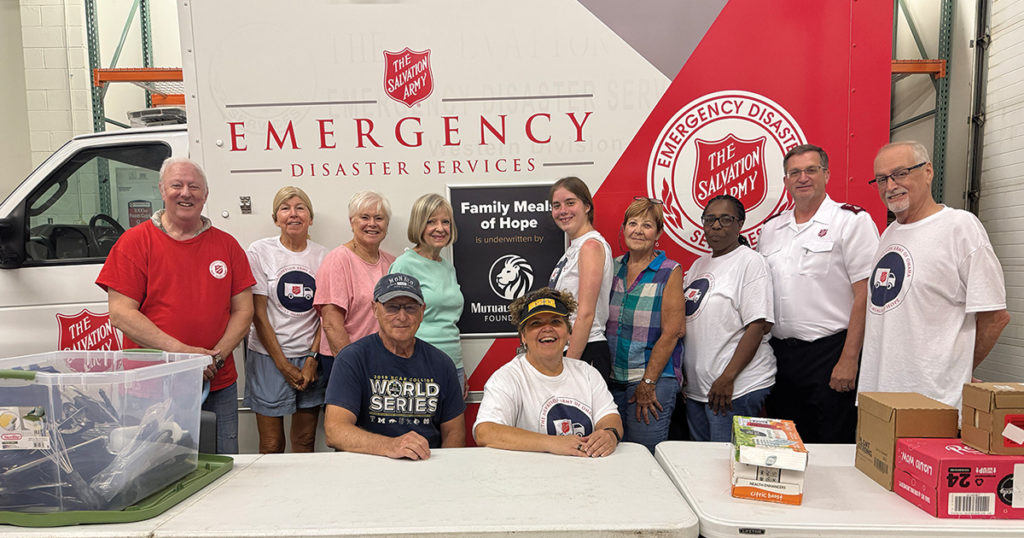
Hope Is On The Menu: Salvation Army Of Omaha Mobile-Meals Program Off To Fast Start
Omaha, Nebraska: Filling the dinnertime food gap: That’s the aim of Family Meals of Hope — a new summertime mobile-meals program from The Salvation Army of Omaha.
The program serves families in need by bringing free, nutritious dinnertime meals directly to conveniently located public places and serving them up food-truck style. Between officers, staff, volunteers, and multiple facilities, it’s a true team effort. Each weekday, some 200 meals are prepared at The Salvation Army Omaha North Corps EDS kitchen and then trucked across town to Western Divisional Headquarters. There, canteen crews gather in the evening, divide the meals up among three canteens, and head out to four separate service stops that cover key “food deserts” around town. The service stops — all in safe, well-marked public places — happen between 6 and 7:15 p.m.
Family Meals of Hope just began its second year of service in June — after a resoundingly successful inaugural campaign back in 2025, during which it served more than 8,300 meals in just eight weeks. Those results came as a pleasant surprise to top Salvation Army officials in Omaha.
“This community-focused program has far exceeded our expectations — from day one,” said Major Dan Hull, Omaha area commander and general secretary of the Western Division. “We’re grateful to the officers, staff, and volunteers who make it happen.”
Major Hull explained that Family Meals of Hope came about after extensive research into the summer food gap in Omaha. Conducted while the division’s predecessor program, Kids Cruisin’ Kitchen (which brought free lunches to public places via canteens), was still in service, the research found that more than 80 summertime free-lunch programs were in operation locally, while at the same time there were relatively few free-dinnertime-meal programs being offered. Those findings would soon spark major changes: Kids Cruisin’ Kitchen concluded its work at the end of the 2024 season and was then transformed into Family Meals of Hope for 2025, using the same canteens and the same crews.
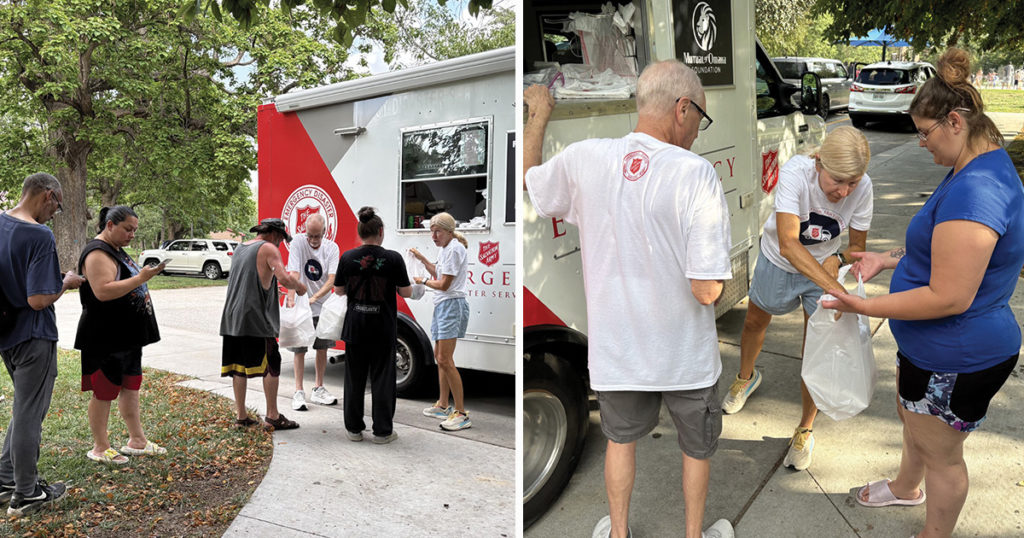
“We made a data-informed decision to sunset the free-lunch program in favor of a free-dinner program,” said Major Hull, “and we saw good results almost immediately. By the time we were about halfway through Family Meals of Hope’s first season, the numbers showed that we had already served more meals by that point than we had for the entire final season of Kids Cruisin’ Kitchen.”
The program has proved extremely popular with local families in need — and now it’s growing rapidly, even though it’s just in its second year. A West Omaha stop has just been added (bringing the service-stop total to four); plus, within a week of the 2026 season getting underway, program officials had to start increasing their daily order of meals just to keep up with demand. What’s more, a local supporter of the Western Division — Mutual of Omaha Foundation — stepped up to fund the entire season.
“Our crews are prepared to serve as many as 10,000 meals this season, if necessary,” said Major Hull. “We want everyone in Omaha to know that we’re prepared to meet the changing needs of the community.”
A Privilege to Serve
Chicago, Illinois: Since 2006, Bruce Williamson has been one of the most engaged members of the Chicago Advisory Board, serving as chair, committee leader, mentor, and strategist. He helped create the Chicago Echelon, recruited new leaders, had a 15-year appointment to The Salvation Army’s National Advisory Board, led territorial initiatives and even served as interim divisional executive director of development.
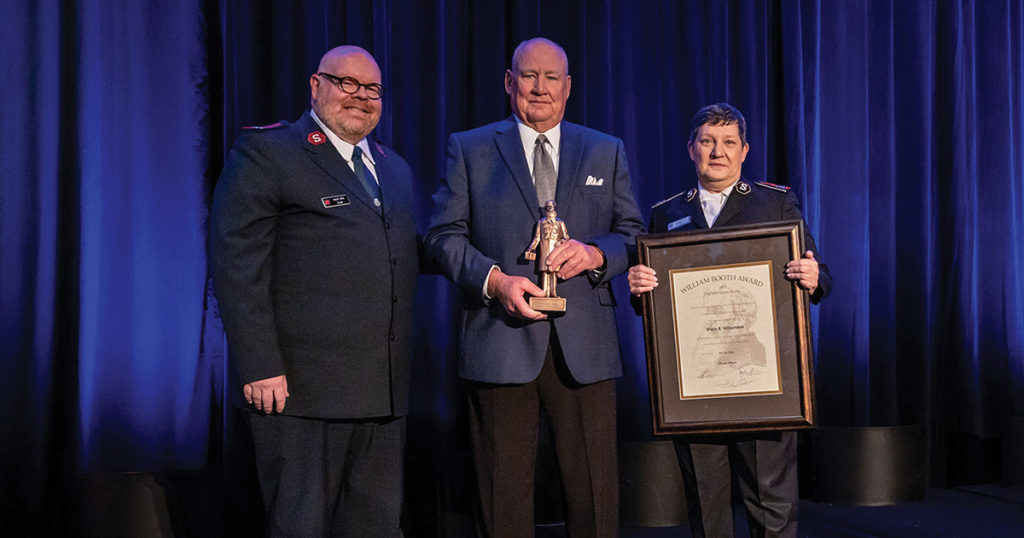
But Bruce is best known for his Virtual Red Kettle. During the past 15 years, Williamson’s Virtual Red Kettle has raised more than $700,000 in support of the Army’s mission. The William Booth Award, The Salvation Army’s highest honor for volunteer leadership and service, was presented to Williamson at the annual Chicago Civic Luncheon for his long-standing commitment to strengthening communities and supporting The Salvation Army’s mission.
“I’m deeply humbled to receive the William Booth Award,” Williamson said in his acceptance speech. “I am honored by the recognition, but more importantly, I see it as a privilege to serve alongside the officers and staff who, every day, are trying to ‘do the most good’ for their fellow man — here and in more than 130 countries. I’m a better man for being around these folks who give their all every day for others.”
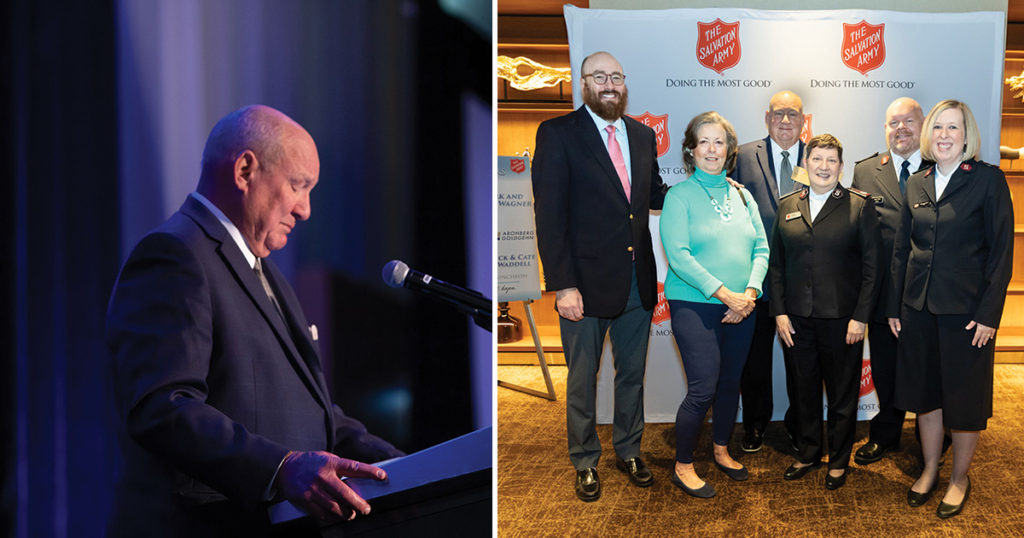
Hope was the focus and the challenge put to those in attendance at The Salvation Army’s 2026 Legacy of Hope Chicago Civic Luncheon. Civic and business leaders gathered at the Hyatt Regency Chicago to recognize lives transformed through long-term community investment and to highlight what becomes possible when people and communities continue showing up for one another over time.
“A legacy of hope is not measured by how long an organization exists or how many buildings it operates. It’s measured by what endures long after a meal is served, a bed is offered, and a moment of crisis passes. It is seen when a parent finds stability and a child grows up safe — when recovery breaks a cycle that once seemed unbreakable, and when a neighborhood remembers who showed up and never stopped caring,” said Lia Caton, Civic Luncheon Co-Chair Planning Committee and Advisory Board Member.
Army Archive: Faith at Ground Zero
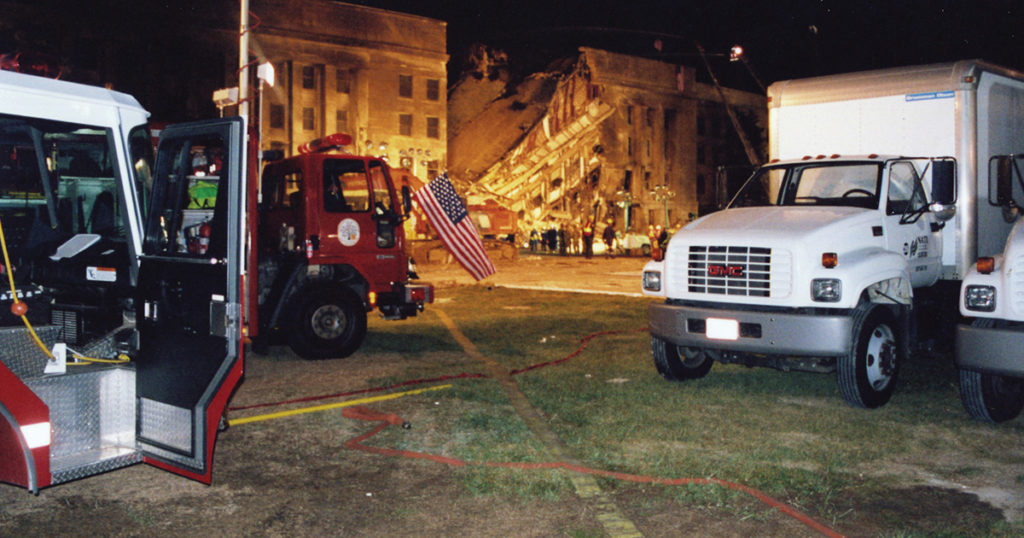
Arlington, Virginia: This image, taken by Walter “Cap” Neilson, Hampton (Peninsula), VA, Corps Advisory Board member, during his deployment assisting with disaster services in Washington, D.C., September 11–15, 2001, reflects the lasting impact of the September 11 terrorist attacks and honors the memory of a day never forgotten.
Photo Credits: Todd Andrews / Central Territory HQ / The Salvation Army Historical Center Southern Territory Museum