Titans of Holiness: The Power of a Consecrated Union
“Can two people walk together without agreeing on the direction?” (Amos 3:3).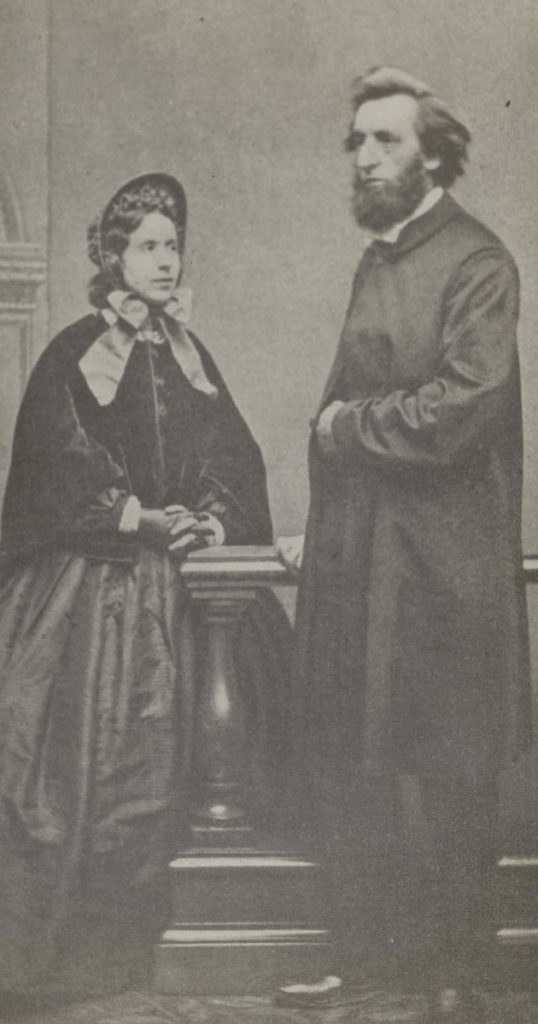
The steam engine was the defining power of the Industrial Revolution, pumping water from mines, driving machinery, and transforming Britain’s landscape.
Its story is usually associated with James Watt, a titan of the industrial age whose engineering genius made the steam engine far more efficient. But Watt did not change the world alone. His ideas needed capital, manufacturing capacity and someone who could see their potential. That partner was Matthew Boulton.
Boulton brought resources, organization and industrial vision. Joined together, their gifts accomplished what neither could have achieved alone, releasing a power that helped transform the world. Yet the greatest power released through human partnerships cannot be measured in horsepower.
During that same revolutionary age, another remarkable partnership was taking shape within early Methodism. John Fletcher was one of Methodism’s most respected leaders and a close associate of John Wesley. He became a leading defender of Wesleyan teaching on salvation and holiness. As vicar of Madeley, he was known as much for prayer, pastoral care and devotion to Christ as for theological ability. Wesley even considered him a possible successor.
Mary Bosanquet brought an equally remarkable calling. Before she ever met Fletcher, she had established a Christian home for vulnerable children and the poor, led prayer meetings, instructed converts and preached the gospel. When challenged for speaking publicly, she defended her ministry to Wesley on biblical grounds, and he affirmed her calling. Mary did not receive a calling by marrying John Fletcher in 1781. She brought an already tested calling into their marriage.
Though their life together lasted less than four years, their union became a powerful Wesleyan example of two lives wholly consecrated to Christ. Neither calling disappeared into the other. Together they prayed, ministered and strengthened one another in holiness and service.
Nearly seventy years later, their example captured the imagination of another thoughtful Methodist woman wondering whether marriage might unite two strong callings without diminishing either. Her name was Catherine Mumford. And God was about to bring a young preacher named William Booth across her path.
Born only months apart in 1829, William and Catherine were prepared for mission along very different paths.
William’s faith was forged amid poverty, pawnbroking and street preaching, where he encountered human need firsthand and developed an urgent burden for the lost.
Catherine’s formation came largely through illness, study and prayer. Her disciplined mind learned to test convictions carefully and follow them to their conclusions.
One was shaped in the streets, the other in the study. God wasn’t preparing a leader and an assistant, but two leaders whose distinct callings would soon be joined.
Late in 1851, Catherine heard William preach at Binfield Road Chapel. A careful judge of sermons, she reportedly called it “one of the best” she had heard there. Before she loved William, she recognized the calling of God upon him.
Their mutual friend Edward Rabbits saw such great potential in their union and aimed to bring them together. At one gathering, William recited the temperance poem “The Grog-Seller’s Dream.” Its uncompromising attack on alcohol struck a deep chord with Catherine, whose temperance convictions had formed in childhood. Between the sermon and the poem, she began to see how closely their convictions aligned.
Their relationship deepened around Easter 1852, when William accompanied Catherine home from a gathering. Walking through London, they spoke freely about faith, calling, ministry and the future. William later remembered falling “over head and ears in love.”
But something deeper than attraction was taking shape. They discovered that they were heading in the same direction. Amos asks, “Can two people walk together without agreeing on the direction?” (Amos 3:3). William and Catherine could not yet see the worldwide movement ahead. But they recognized in one another the same consuming purpose: the glory of God and the salvation of the world.
Catherine’s growing affection for William did not immediately settle the question of their future. William was poor. His ministerial prospects were uncertain. Catherine’s health remained fragile. Marriage to him offered neither comfort nor security. More importantly, Catherine would not assume that the strength of her feelings proved the relationship right. Her heart had been awakened, but she refused to allow emotion to replace discernment.
She later described the following weeks as a “whirlwind.” Catherine prayed, examined her motives and surrendered the relationship to God. Would this union draw them nearer to Christ? Did they share the same calling? Could their life together glorify God and be useful for His kingdom purposes? Catherine understood that love must be tested by truth and brought under the lordship of Christ.
William’s affection for Catherine was unmistakable. He was deeply serious about searching out God’s will, but he knew what little he could presently offer her. While his dreams for ministry were grand, he was limited financially. Loving Catherine meant considering not only what he desired, but whether their callings were equally yoked. Rather than rushing ahead, they waited, prayed and sought His will. In doing so, their love was not weakened but consecrated.
On May 15, 1852, Catherine wrote to William. The storm within her had finally quieted. “The whirlwind is past,” she told him. “All is well. I feel it is right.” But Catherine did not stop with the assurance that they should simply be together. She and William believed their goal was “The nearer our assimilation to Jesus, the more perfect and heavenly our union.” This was the heart of their relationship.
Like John and Mary Fletcher before them, William and Catherine envisioned a marriage in which two callings could be united without either being extinguished or diminished. Catherine imagined them walking through life together — sharing its joys and storms and fulfilling its duties with “thorough unanimity.” Such a union, forged in Christ, would bring glory to God and blessing to many.
During their three-year-long engagement, letters carried their love across the miles. The letters were affectionate, but never merely romantic. They discussed scripture, sermons, books, health, money, ministry, music, character, marriage and the kind of home they hoped to build. They prayed for one another at agreed times, offered encouragement, admitted fears and repaired misunderstandings.
William longed for Catherine’s presence. He imagined returning from exhausting ministry to a home where he could rest, speak freely and find encouragement. He wanted her to hear his sermons, criticize them honestly and urge him forward. Catherine shared that longing. She wanted their future home to be “sunny and bright, pure and calm, refined and tender” — a place where children could be formed for heaven and where someone burdened by ministry could find rest.
Yet Catherine’s love for William wasn’t merely comforting. She loved him too deeply to flatter him. She challenged his ambition, confronted his impulsiveness, urged him to care for his health and reminded him that outward success could never substitute for inward holiness.
William, in turn, recognized Catherine’s extraordinary mind, encouraged her writing and increasingly valued her spiritual judgment as essential to their shared future. His evangelistic urgency drew her gifts toward a wider public ministry, while her disciplined thinking brought theological depth and direction to their mission.
Boulton and Watt showed what could happen when two very different gifts were joined around a common purpose. John and Mary Fletcher showed that marriage could do something similar in the life of faith, bringing two callings together in the pursuit of holiness.
William and Catherine would embody that pattern in the life and calling God had prepared for them. Though they differed in gifts and perspective, neither diminished the other. Their shared desire to live for the glory of God and the salvation of the world drew their strengths together in a partnership centered on Christ.
The movement that emerged from that partnership grew out of holy love. The fruit of their surrender to Christ was The Salvation Army — a missional expression of His love. Together, the co-founders would train and mobilize a people committed to proclaiming salvation, cultivating holiness, confronting sin, serving suffering humanity and carrying the gospel to those others had failed to reach.
In an age of industrial titans, God raised up two titans of holiness. Catherine could not yet see all that their union would become, but she understood its purpose: “Who can estimate the glory to God, and the benefit to man, accruing from a life spent in such harmonious effort to do His will?”
Photo: The Salvation Army National Archives; Illustration: Alexey Yaremenko/Getty