

Field Notes: May 2026
"This illustrates what we hope to achieve through our relational, client-choice approach to addressing food insecurity.”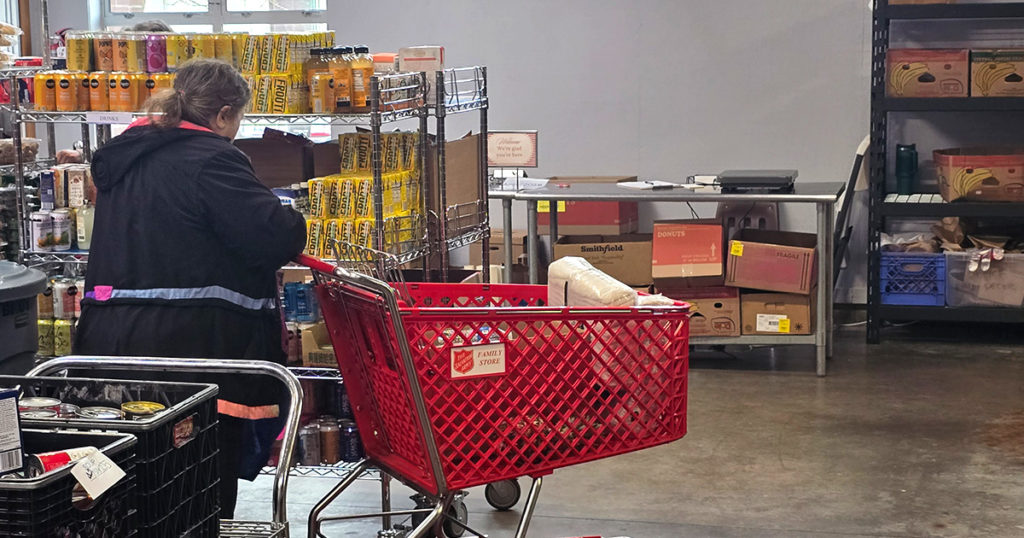
Renton Corps Hope Market
Renton, Washington: In the Northwest Division, the traditional food pantry model is being transformed into something new. These new Hope Markets resemble high-end grocery stores and offer a more dignified way for clients to receive the food they need rather than a box of pre-determined goods given to them.
At the Renton corps in Washington, the last stage of renovation was recently completed to convert the food pantry to the Hope Market model. “As of the new year, our clients have the ability to shop our full store and pick what they want and receive reasonable amounts,” said Jason Travis, the warehouse manager at the Renton facility. “As long as we have the inventory, we let them make the choice instead of us deciding for them. This allows our clients to feel more like individuals who are special and loved.” Jason went on to say that the design of Hope Markets allows volunteers more time to stock and inventory the food, which in turn allows for more variety, and therefore more choices for clients. He says they have received great feedback from clients, who have expressed their gratitude and admiration of the range of groceries to choose from.
Renovations are currently underway to convert Salvation Army food pantries in Everett, Tacoma and Spokane, Washington. When those projects are complete, only one corps in the Northwest Division will be unable to operate with the fully client-choice Hope Market model due to space constraints. Corps are seeing more engagement with their communities thanks this new foodbank strategy. Divisional Commander Lt. Colonel Cindy Foley said, “Families shop at our Hope Markets, learn about our programs and services, and become involved in our corps programs. This illustrates what we hope to achieve through our relational, client-choice approach to addressing food insecurity.”
Ernest and Evelyn Rady Presented with William Booth Award
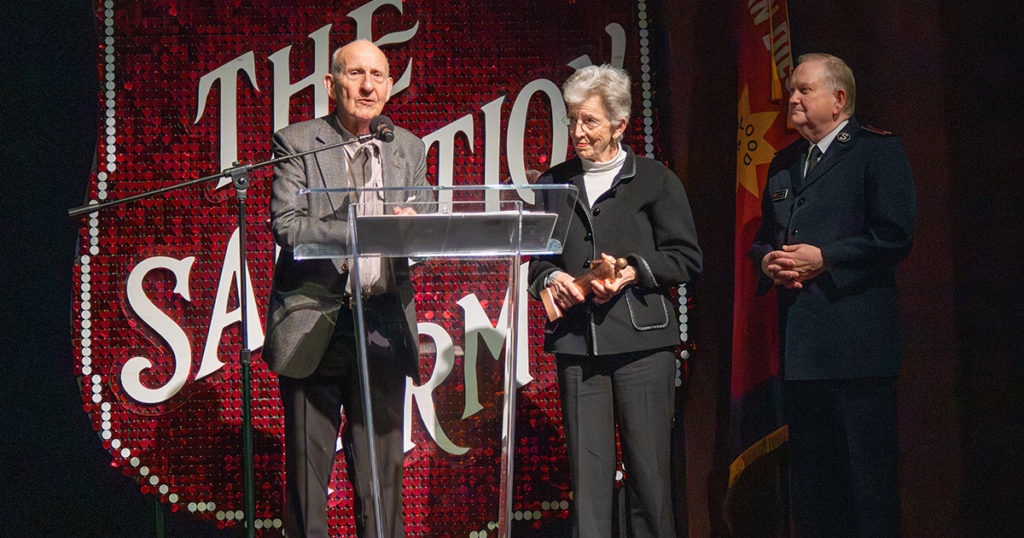
San Diego, California: When The Salvation Army’s National Advisory Board gathered in San Diego at the beginning of the year, philanthropists and longtime Salvation Army supporters Ernest and Evelyn Rady were presented with the William Booth Award, one of the highest honors The Salvation Army can bestow.
Ernest and Evelyn Rady have dedicated their lives to transforming San Diego communities through generosity, vision, and compassion. Married for over six decades, they moved to San Diego in 1966 seeking relief from Evelyn’s allergies — finding instead a lifelong mission to serve others.
Ernest’s entrepreneurial spirit led him to found American Assets Trust and Insurance Company of the West, building businesses that now fuel his philanthropic endeavors. Evelyn worked as a social worker and probation officer, bringing empathy and advocacy to vulnerable populations. Together, they established the Rady Family Foundation in 2002 and joined the Giving Pledge in 2018, committing to donate the majority of their wealth. “Because of these blessings,” Ernest said, “Evelyn and I believe it is important to share our good fortune with others.”
Their impact spans healthcare, education, social services and housing including the Rady Children’s Hospital, UC San Diego Rady School of Management and an historic $50 million pledge to date to The San Diego Salvation Army to combat homelessness, funding the Rady Residence for families and Rady Center for adults experiencing homelessness.
Ernest explains their choice of The Salvation Army to combat homelessness: “I think it’s a well-known organization, and it’s one of the best in the country for sure. We don’t describe it to anybody, we just say ‘Salvation Army,’ and there’s a Latin expression, called res ipsa loquitur, the matter speaks for itself… you guys don’t need explanation.”
Ernest and Evelyn’s philanthropy embodies the spirit of William Booth—practical compassion that changes lives. Their generosity is providing hope and stability for thousands of San Diegans, ensuring that the most vulnerable have a path from hardship to home.
Army Archives: “Fuel for the Front Lines”
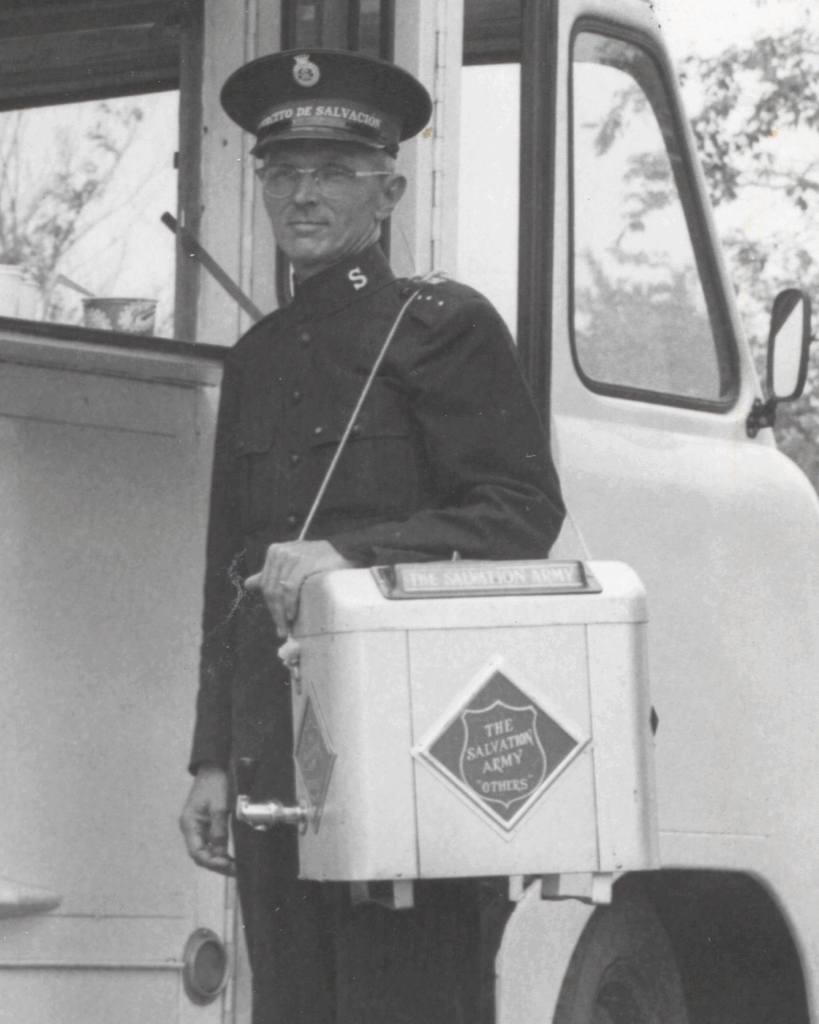
Lawton, Oklahoma: Salvationists, like S/Captain Luther Smith in 1957, carried the “Walkie Coffee,” a backpack dispenser for coffee, water, or soup used during wartime and disaster relief. This early mobile supply symbolizes the Army’s readiness to serve both body and soul.
Celebrate National Salvation Army Week by spotting everyday acts of service, compassion and hope in action.
USA: The THQ Youth Department and G-Lab Group’s Bingo Card is a fun, interactive way to inspire participation, build fellowship and live out faith in action throughout the week.
Photos by Mimi Williams, and Army Southern Historical Center at Evangeline Booth College